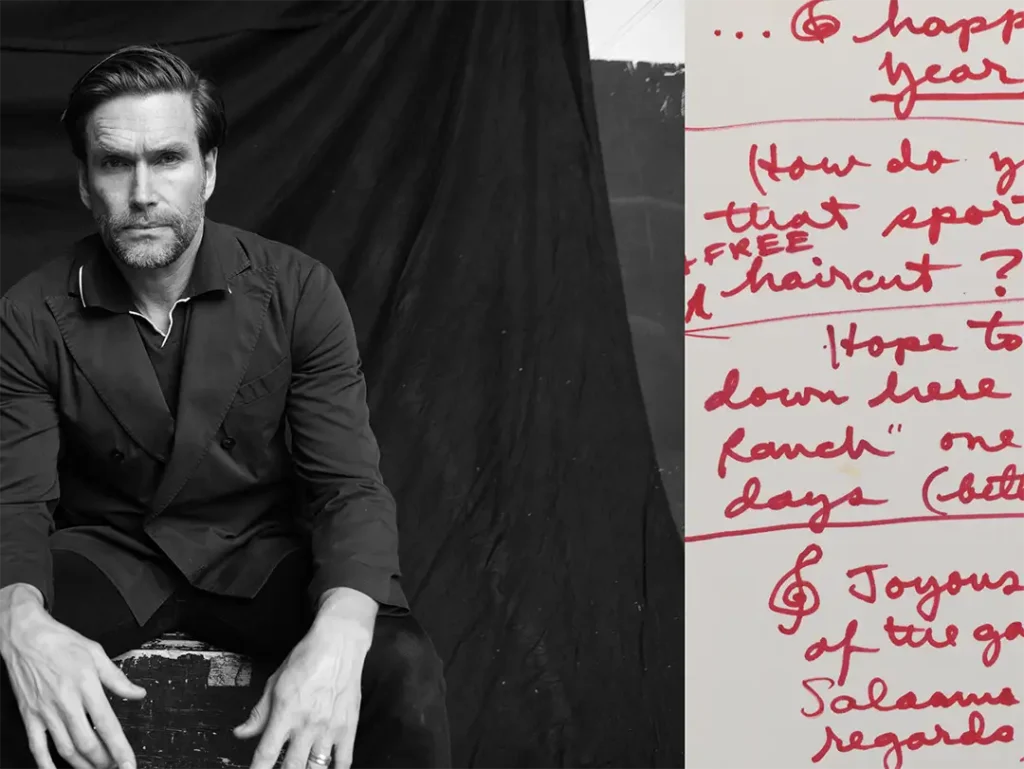
RAFAEL EDHOLM Director | Writer | Actor | Producer
Rafael Edholm has always understood reinvention. Before film and television, he made his mark as
an international male top model, mastering image and presence long before the camera began
telling stories. That fluency carried him into European cinema, where he became a leading man—
and was duly crowned Sweden’s Sexiest Man—before choosing a less predictable path.
Rather than stay in front of the lens, Edholm moved behind it. His directorial debut, Completely
Crazy, was a gleefully anarchic calling card, followed by Baba’s Cars, a snowmobile-fueled
Swedish Western for Nordisk Film; the brooding thriller Dark Waters for SF Studios; and Viaplay’s
razor-sharp Veni Vidi Vici. The result: Coen Brothers style dark humor filtered through Nordic noir.
Critics took notice, with Variety naming him to its Top 10 International Directors Critics’ Choice
list.
As if that weren’t enough, Edholm turned to literature. His novel Svarta Björn was snapped up by
Bazar/Bonnier and sold more than 22,000 copies in six months, launching a growing fictional
universe with sequels already in progress.
For Edholm, there are no boundaries, only forward motion.
He doesn’t merely make films. He reshapes the space around them.
For Edholm, versatility is not a detour but a strategy. Each reinvention builds on the last, reshaping
not only his career but the space in which it operates. His next chapter arrives in 2026.
Next, he will direct and star in A-MEN to That and sing. The next detonation is scheduled for end of
january 2026.
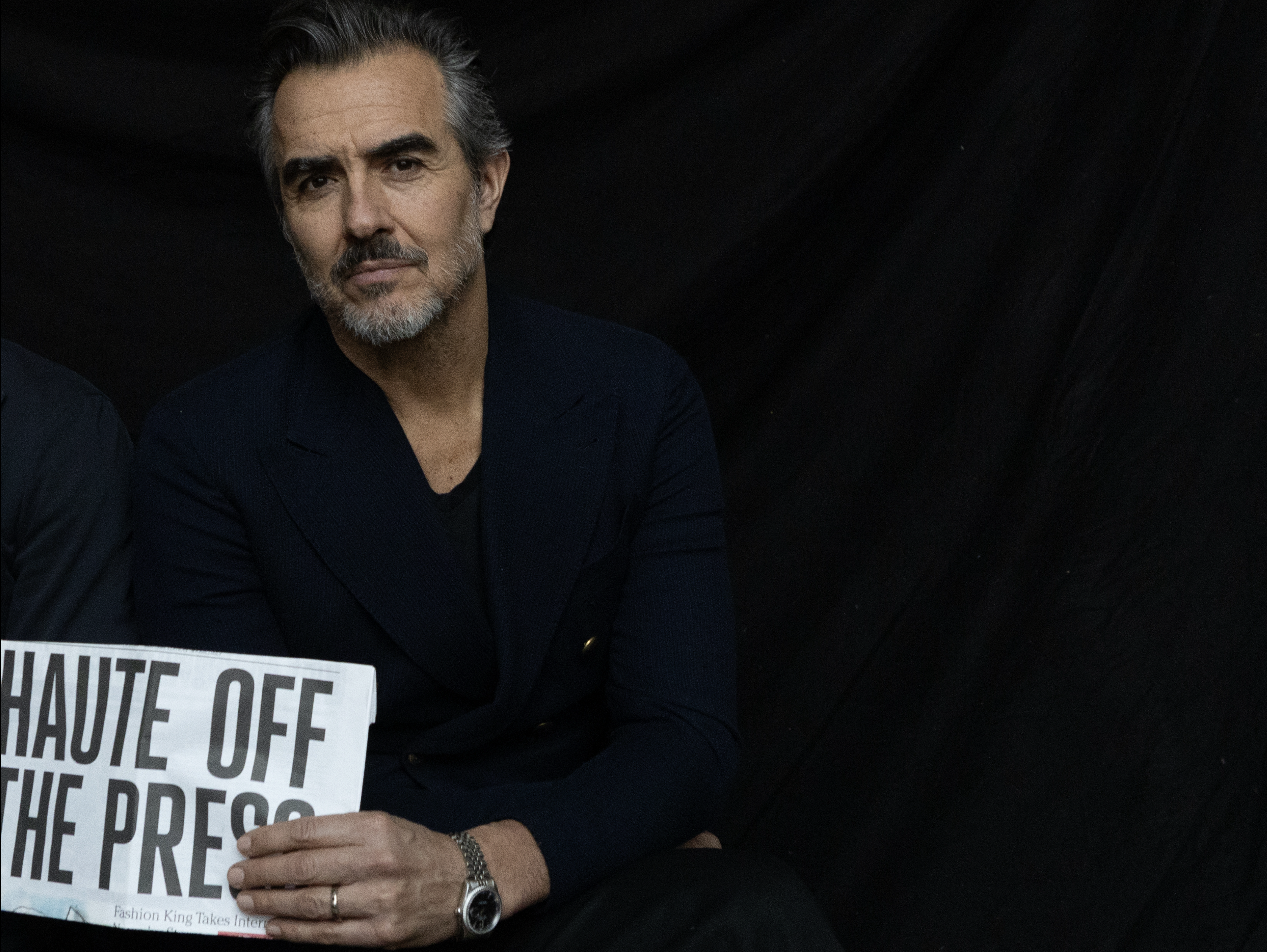
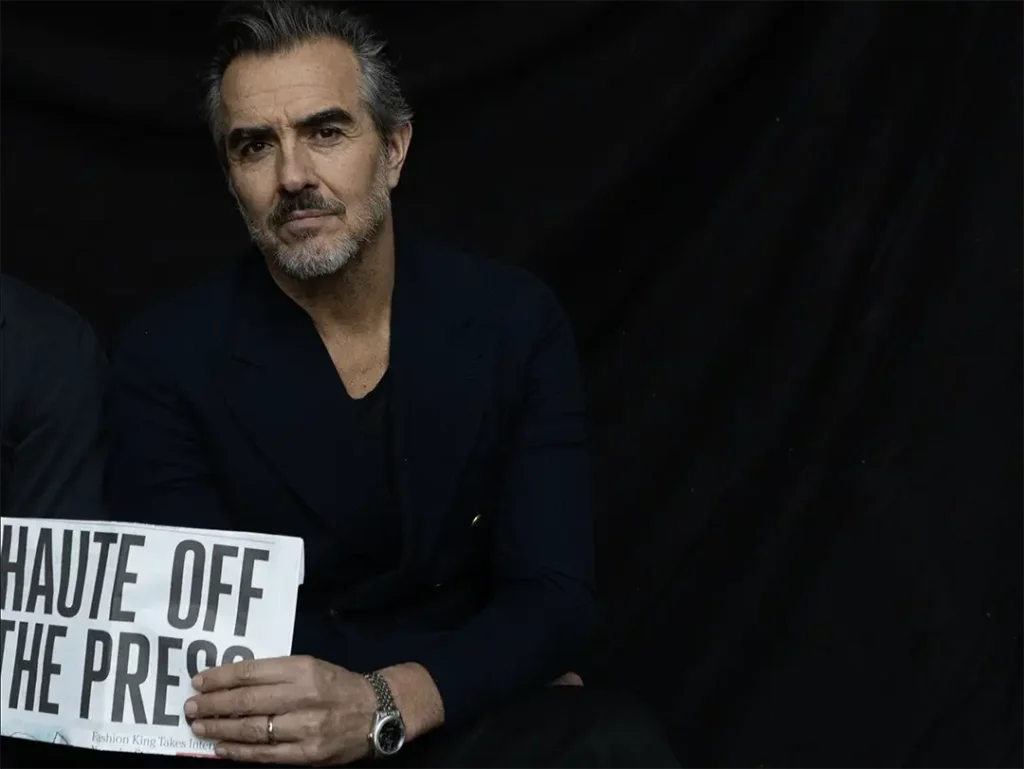
Knut Berggren and the Art of the Second Act
Knut Berggren has never been interested in staying in one frame. Long before the fashion world
learned his face—before campaigns, continents, and the machinery of global modeling—he
understood visibility as a doorway, not a destination. Today, still modeling and counting, he works
selectively, treating fashion not as a peak to defend but as one medium within a longer creative life.
Modeling gave him access, discipline, and a front-row seat to an industry built on immediacy and
disposability. It also gave him perspective—an understanding of how images are constructed,
narratives sold, and attention moves on. But it was never the endgame. “I was always more curious
about what lived beneath the image,” he says. “The structure. The emotion. The sound.”
That curiosity pulled him into music production, where authorship replaces appearance and restraint
carries weight. His work favors atmosphere over spectacle, intention over noise. It doesn’t demand
attention; it invites presence.
Rather than aging out of fashion’s unforgiving cycle, he chose to age through it—reframing
experience as value rather than liability. Reinvention, for Berggren, isn’t about relevance but
coherence: building a creative life that evolves without erasing its past.
In a culture addicted to exposure, Berggren remains measured. He knows when to step forward and
when to let the work speak. In industry terms, he represents a rarer model—longevity without
stagnation, visibility without overexposure.
Beyond his creative work, he is a passionate fly fisherman, skier, and enthusiast of watersports and
carpentry.
But above all else, he is a proud father.

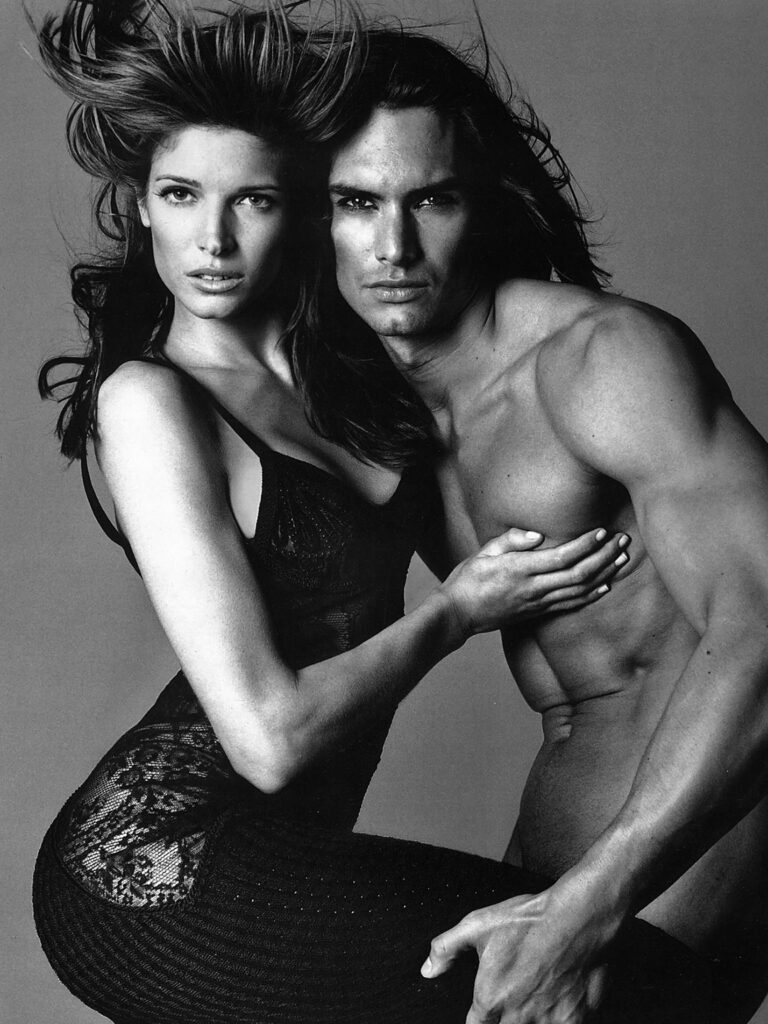
Marcus Schenkenberg
Of course he is beautiful. But the man widely recognized as the world’s first male supermodel was
never meant to be reduced to a face—or a body—alone.
Marcus Schenkenberg arrived with something rarer than symmetry: intention. An economics
student in Sweden and a natural polyglot, he quietly dismantled the industry’s most persistent myth,
pairing intellect with physical perfection. The result was not just allure, but authority.
His discovery feels almost mythic. After moving to the U.S. with a close friend, Schenkenberg
worked a string of jobs across the country before landing in Los Angeles as a nanny in the
Hollywood Hills. On weekends, he roller-skated along Venice Beach—until a photographer stopped
him mid-glide. A few photos changed everything. Within weeks, he was on a plane to Europe,
stepping onto the runways of Milan and Paris.
It was print, however, that sealed his cultural impact. In 1991, Calvin Klein cast Schenkenberg
opposite Carre Otis in a provocative, 116-page Vanity Fair spread shot by Bruce Weber. One image
—Schenkenberg showering, naked and unguarded—redefined the male body in fashion, elevating it
from accessory to icon.
The moment was perfectly timed. As Naomi, Cindy, Claudia, Linda, Christy, and Kate ruled the era,
Schenkenberg emerged as their male counterpart. Designers adored him. Photographers like
Avedon, Weber, and Meisel returned to him repeatedly. He became the first man on the cover of
Harper’s Bazaar and the face of Calvin Klein at its cultural peak, soon followed by Valentino,
Versace, Donna Karan, and Armani.
Schenkenberg didn’t just model the 1990s. He embodied its redefinition of beauty—confident,
intelligent, and unapologetically visible.